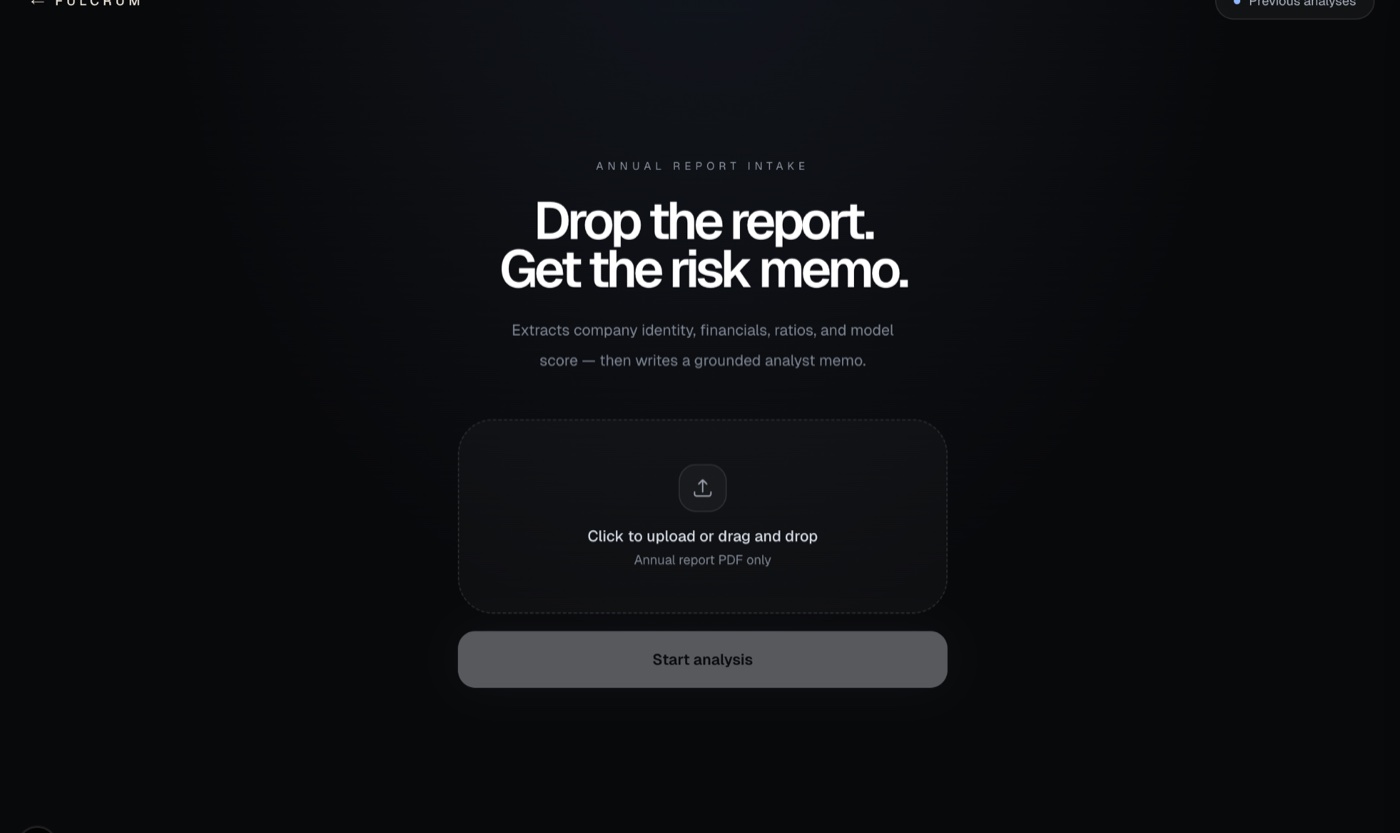
indian credit underwriting still runs on an analyst reading a pdf and typing ratios into a spreadsheet. it is slow, inconsistent, and the reasoning evaporates the moment it is finished.
this pulls around 25 financial fields from any annual report, computes tier 1a ratios, then runs two models trained on a cohort of wilful defaulters against matched controls.
the output is a memo, not a score. a number nobody can interrogate is worse than no number.
the pipeline
upload an annual report. gemini pulls around 25 fields out of it: revenue, pat, ebitda, borrowings, cash from operations, contingent liabilities. everything is reconciled into inr crore, and anything inconsistent is flagged rather than quietly fixed.
ten tier 1a ratios come out of that. two models score them in parallel, a primary engine and a benchmark that audits it, and the result is a risk score from 0 to 100 and a decision bucket.
then a model writes the memo, grounded in what was extracted. if the model is unavailable the memo falls back to deterministic sections, so a report always finishes.
what it was trained on
100 companies across three financial years, 300 rows. fifty wilful defaulters and fifty controls. companies where the outcome is already known.
there is a dashboard that exists only for calibration. it shows how scores spread across that cohort, so a 70 means something before you read a new report.
what it is not
a replacement for an analyst. it is a first read that surfaces what is worth investigating, so the analyst spends the time on judgment instead of typing numbers out of a pdf.
the report streams to the page as each stage finishes. jobs are flat files on disk. there is no database, and it did not need one.